
Growing Coffee
Producing exceptional coffee requires careful work at every stage of cultivation and processing. At Hacienda La Arcadia, our focus is on disciplined agricultural practices, careful harvesting, and controlled processing techniques designed to protect and enhance the quality of the coffee.
Each stage, from planting and cultivation, to depulping and drying, plays a role in shaping the final character of the coffee.
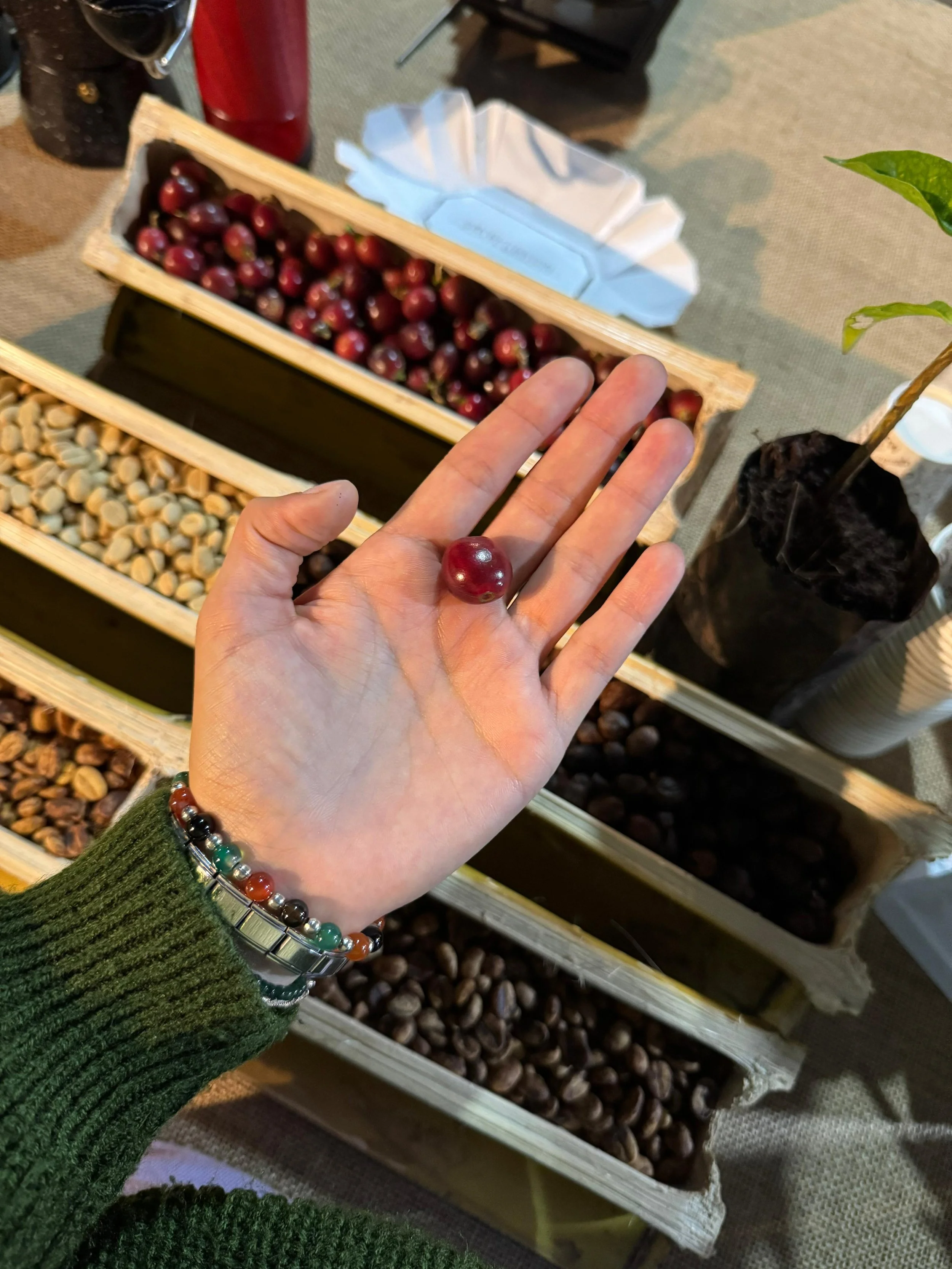
A Distinctive Growing Environment
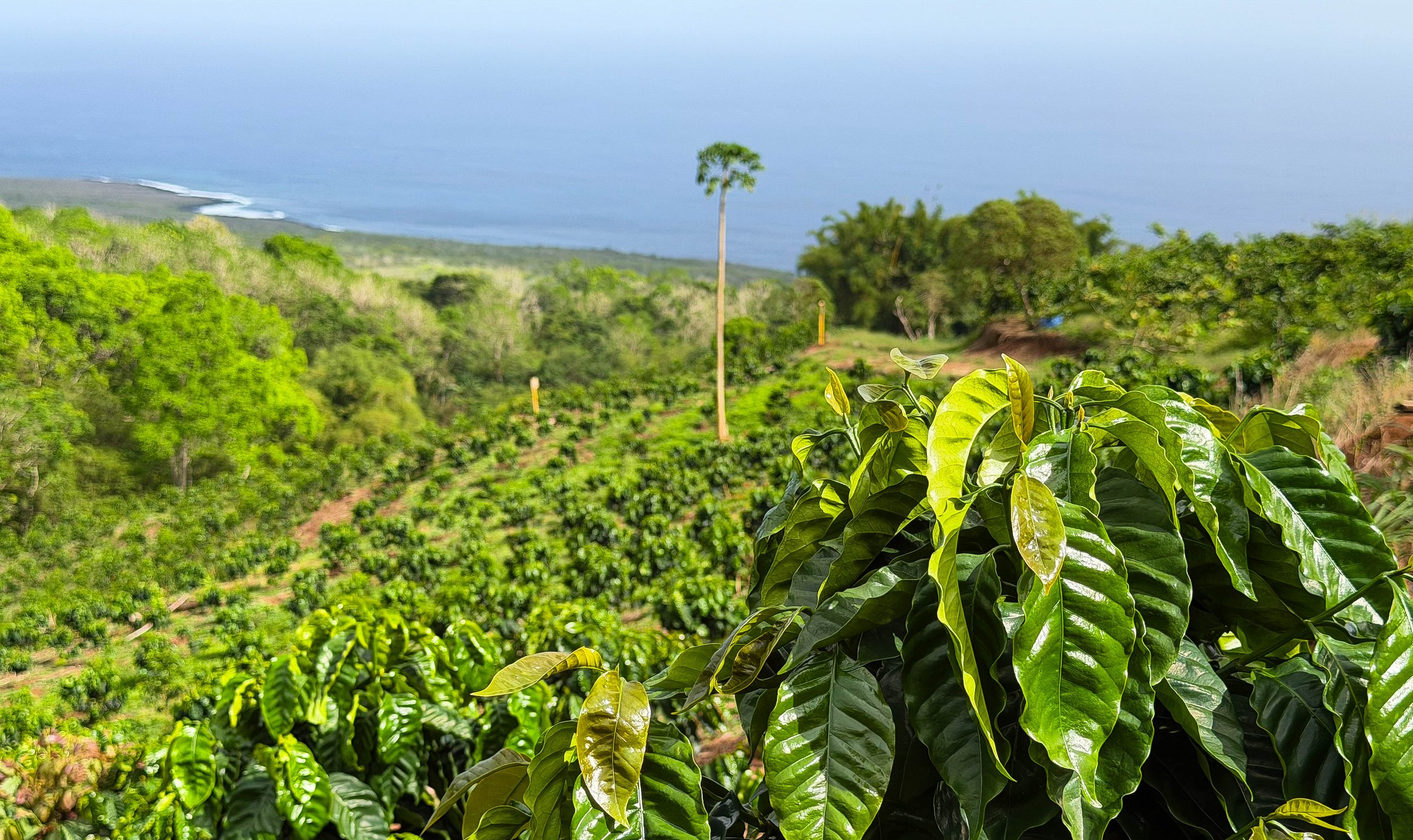
Hacienda La Arcadia is located approximately 300 meters above sea level in the agricultural zone of San Cristóbal Island. The farm benefits from a stable island climate, volcanic soils, and consistent moisture from nearby freshwater sources.
Our unique positioning on the Galapagos Islands allows our coffee to develop at lower altitudes than would normally be possible. While many farms at similar altitudes experience fruit development cycles of six to seven months, we have harvested excellent coffee that matured for as long as fourteen months. This extended development is supported by the islands’ cool, maritime micro-climate which reduces metabolic stress on the plant, slowing the fruit's ripening process. This extended time permits the coffee to develop to its fullest potential.
Although some seasonality exists on the island, the island works with us to deliver even rains and balanced sun exposure year round. The volcanic soil on the island provides minerals, as well as excellent drainage for the plants, preventing water-logging and delivering key nutrients that stimulate flavor development within the beans.
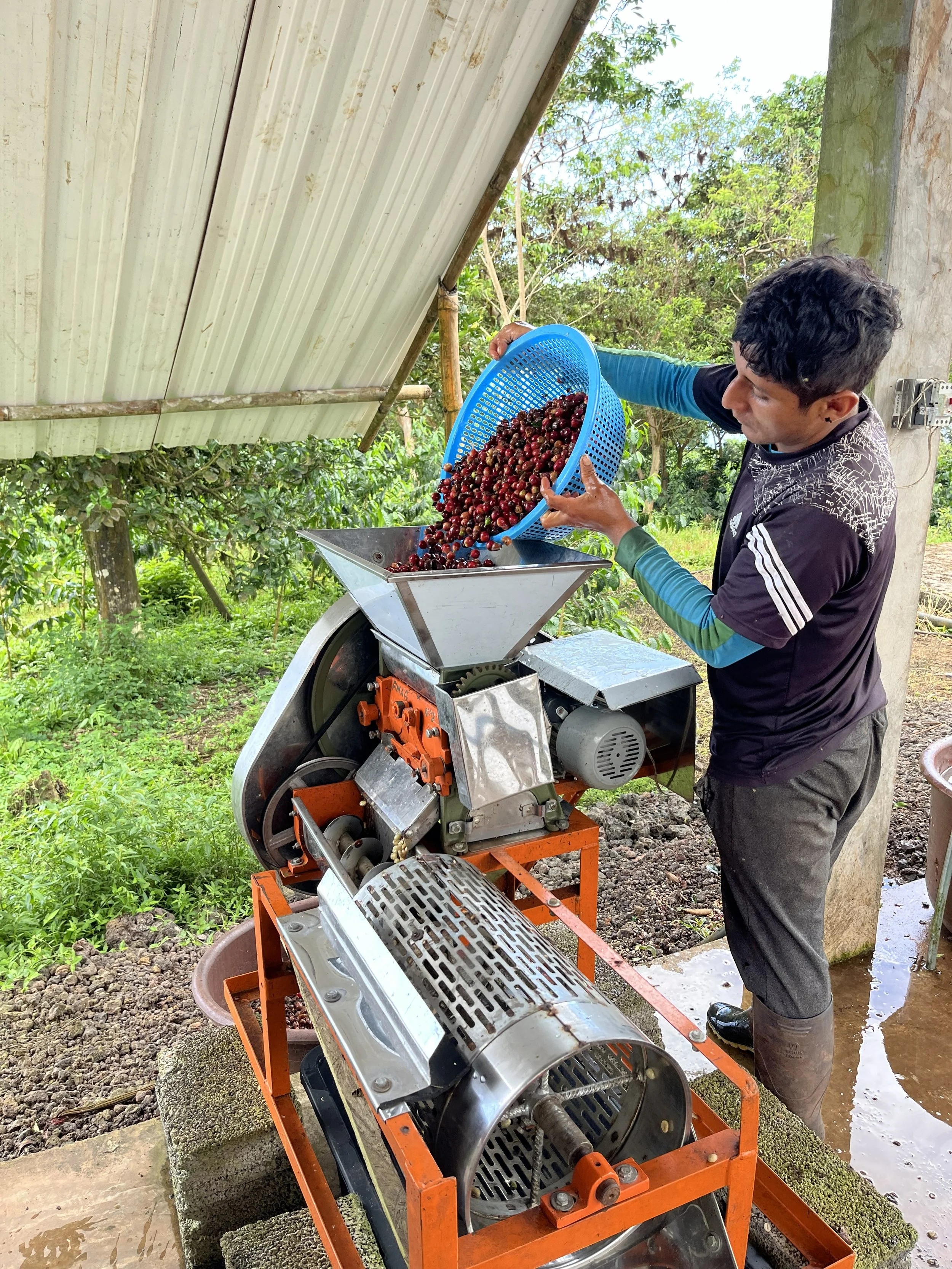
Hacienda La Arcadia is located on the only island in the Galápagos with a permanent source of freshwater. The farm is nourished by a natural highland stream that flows through the same landscape explored by Charles Darwin during his visit to San Cristóbal in 1835. Historical accounts note that this freshwater source sustained Darwin and his crew during their time on the island. Today, that same clean, mineral-rich artesian water supports both the health of the coffee trees and the careful processing of the cherries.
Cultivation
Producing healthy coffee plants begins with careful management of the plants. Throughout the year the farm focuses on maintaining strong trees through pruning, soil management, irrigation, and general plant care. This constant attention to plant health ensures that trees remain productive and capable of producing high-quality cherries.
Even before planting begins, careful consideration is given to the selection of mother plants. We identify trees with the strongest genetics and use their seeds to begin the next generation of coffee. These seeds are germinated and carefully raised in our nursery, where the young plants are monitored during their earliest stages of development.
After approximately nine months, the seedlings are ready to be transplanted to the field. At this stage we once again evaluate each plant, selecting only the strongest and healthiest candidates to continue growing on the farm.
Planting
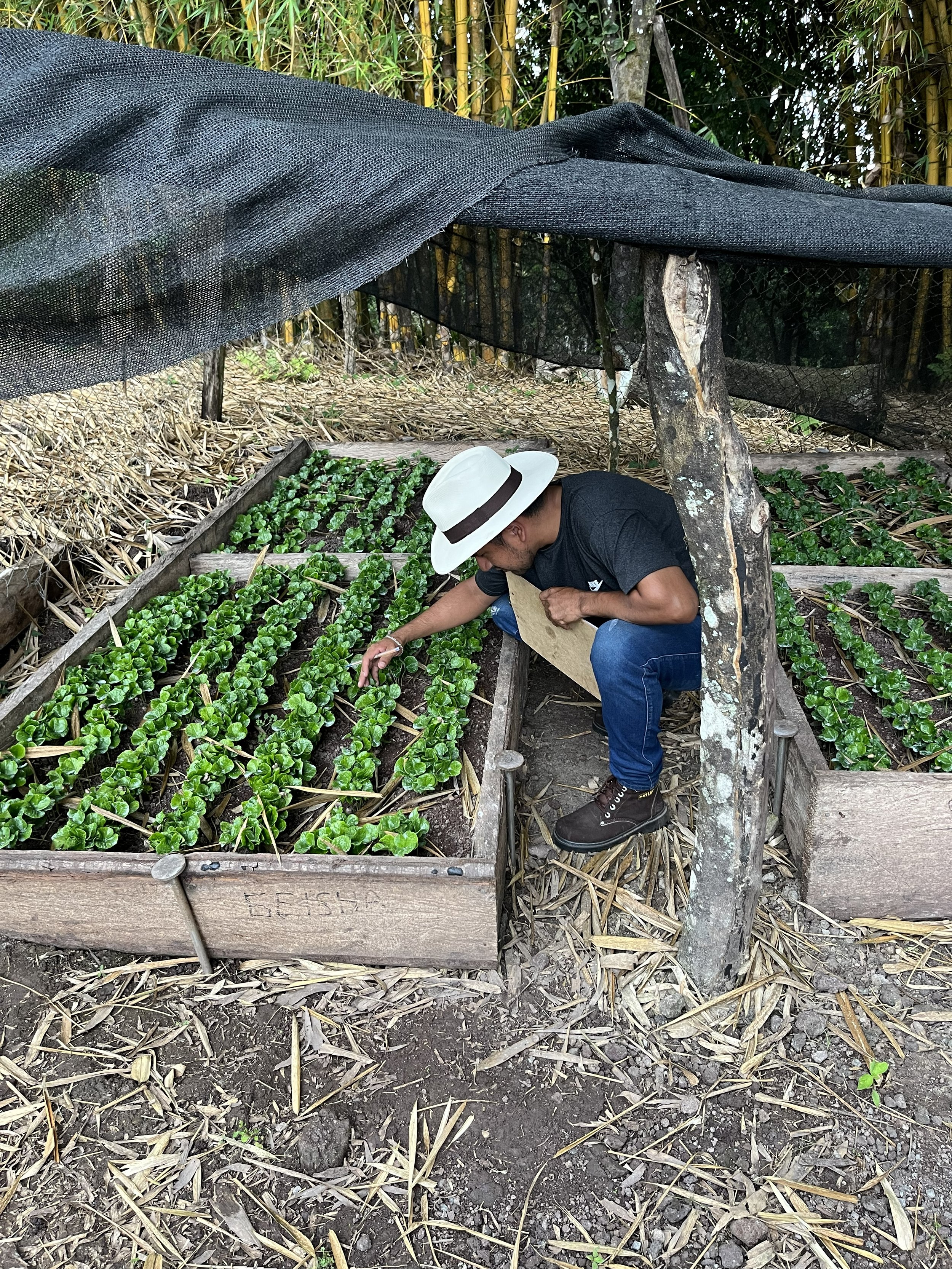
Once planted, our agronomists work year-round to ensure that every tree receives the care it needs to thrive. This work includes base clearing to maintain a clean area beneath the trees, weed control, calibrated irrigation, and both phytosanitary and formative pruning. These activities are accompanied by continuous monitoring of plant health and soil indicators, which guide our decision-making process throughout the growing cycle.
Tree Care
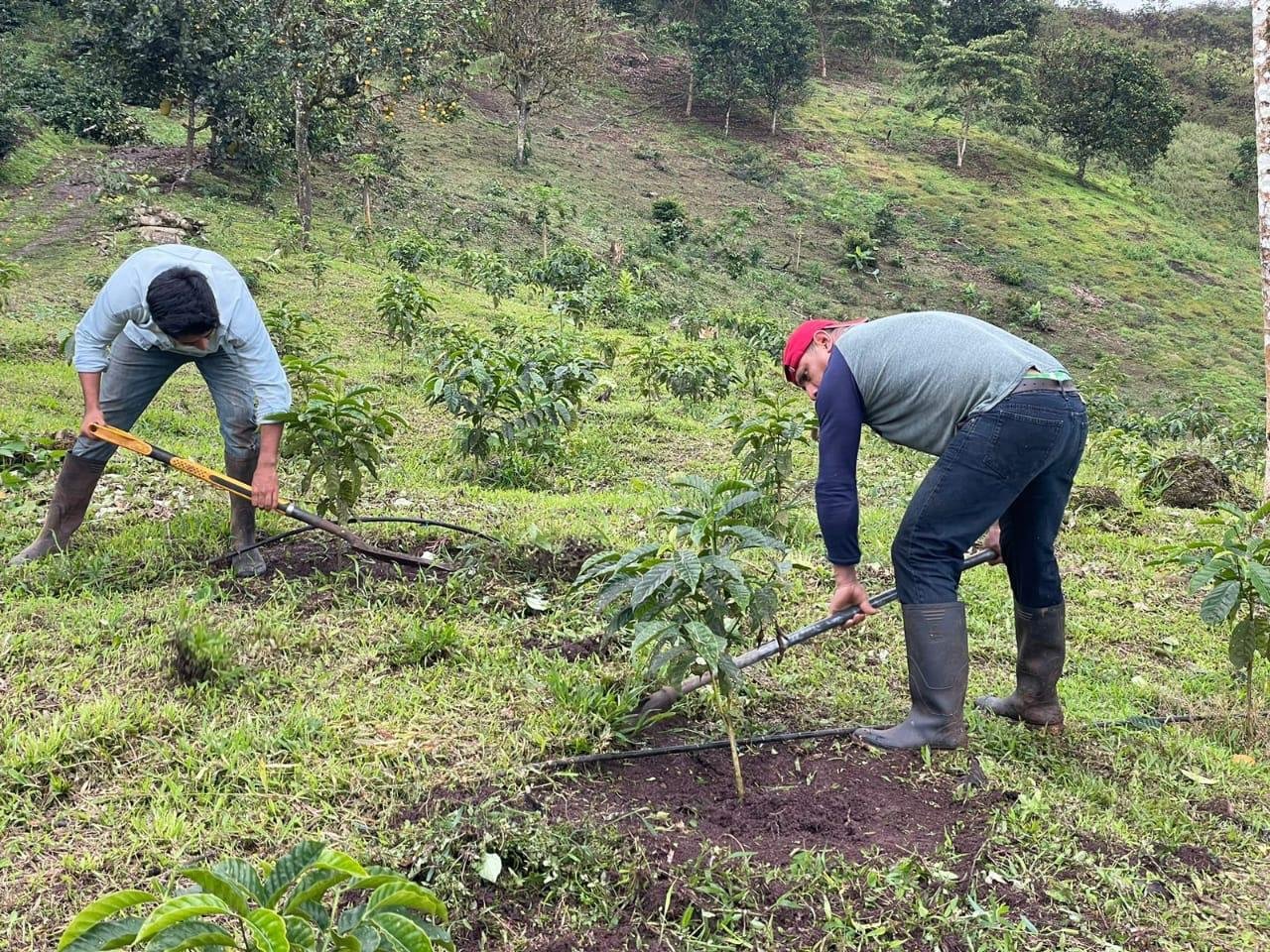
Water management plays a critical role in maintaining plant health and facilitating cherry development throughout the year. While the Galapagos climate provides regular rainfalls, our drip-irrigation system allows us to calibrate the supply of water to every plant during periods of reduced precipitation. Careful control of the plants’ water supply allows us to maximize productivity while avoiding excess moisture which could jeopardize root health.
Irrigation
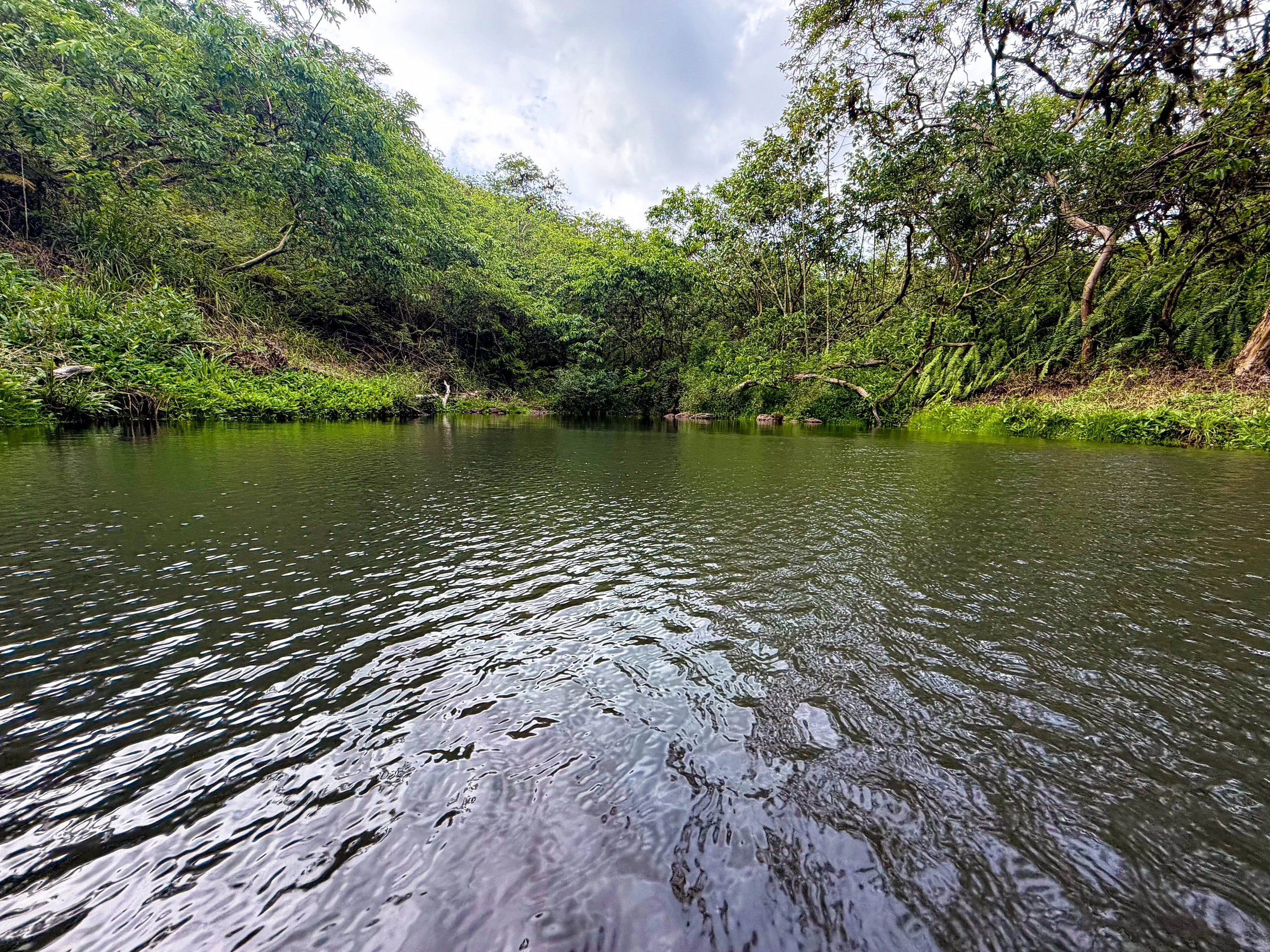
Coffee cherries are harvested by hand, allowing pickers to select fruit at peak ripeness. We make multiple passes through the farm during every harvest to prevent cherries from over-ripening while also giving underripe cherries additional time to mature. Selective harvesting ensures that only optimally mature cherries move forward into processing, which helps preserve the clarity, sweetness, and purity of the final product.
Pickers are trained in proper harvesting technique, which ensures that tree branches are not damaged during the harvest, protecting the long-term health and productivity of the trees.
Selective Harvesting
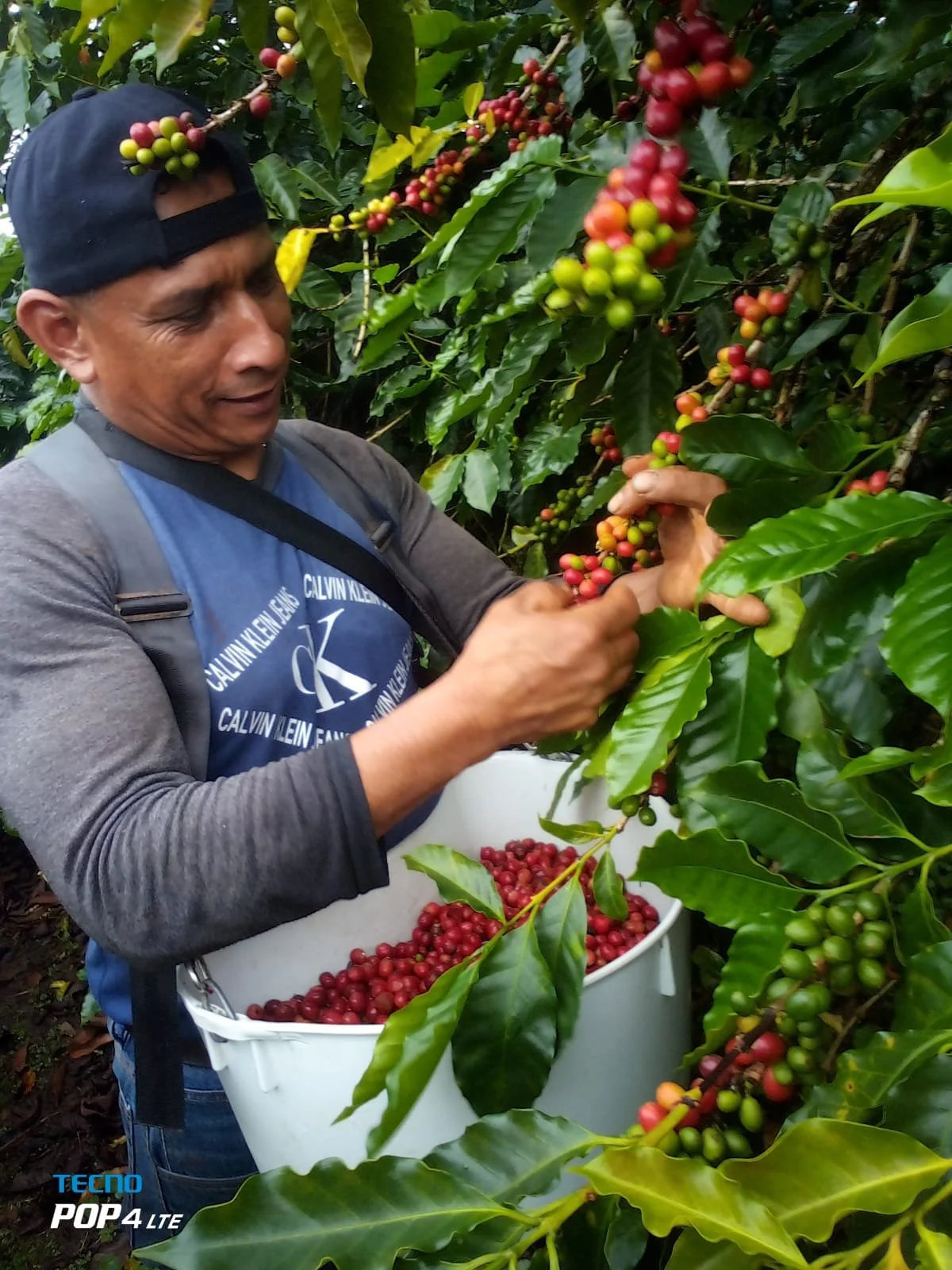
The work does not stop once the cherries are picked. Every lot of harvested coffee is carefully processed to ensure that the raw material we work so hard to cultivate maintains its quality through the final stages of production.
We produce coffee through the natural, honey, and washed processes and experiment with different fermentation levels to identify the optimal processing profile for each coffee. This approach allows us to highlight the unique strengths of each variety
Post-Harvest Processing
When harvested cherries arrive at the wet processing station, they first undergo an initial selection. During this stage, we remove cherries that are not optimally ripe as well as any plant matter that may have been collected during harvesting. Once this sorting is complete, the coffee is ready to proceed to the next stage of processing.
Initial Selection
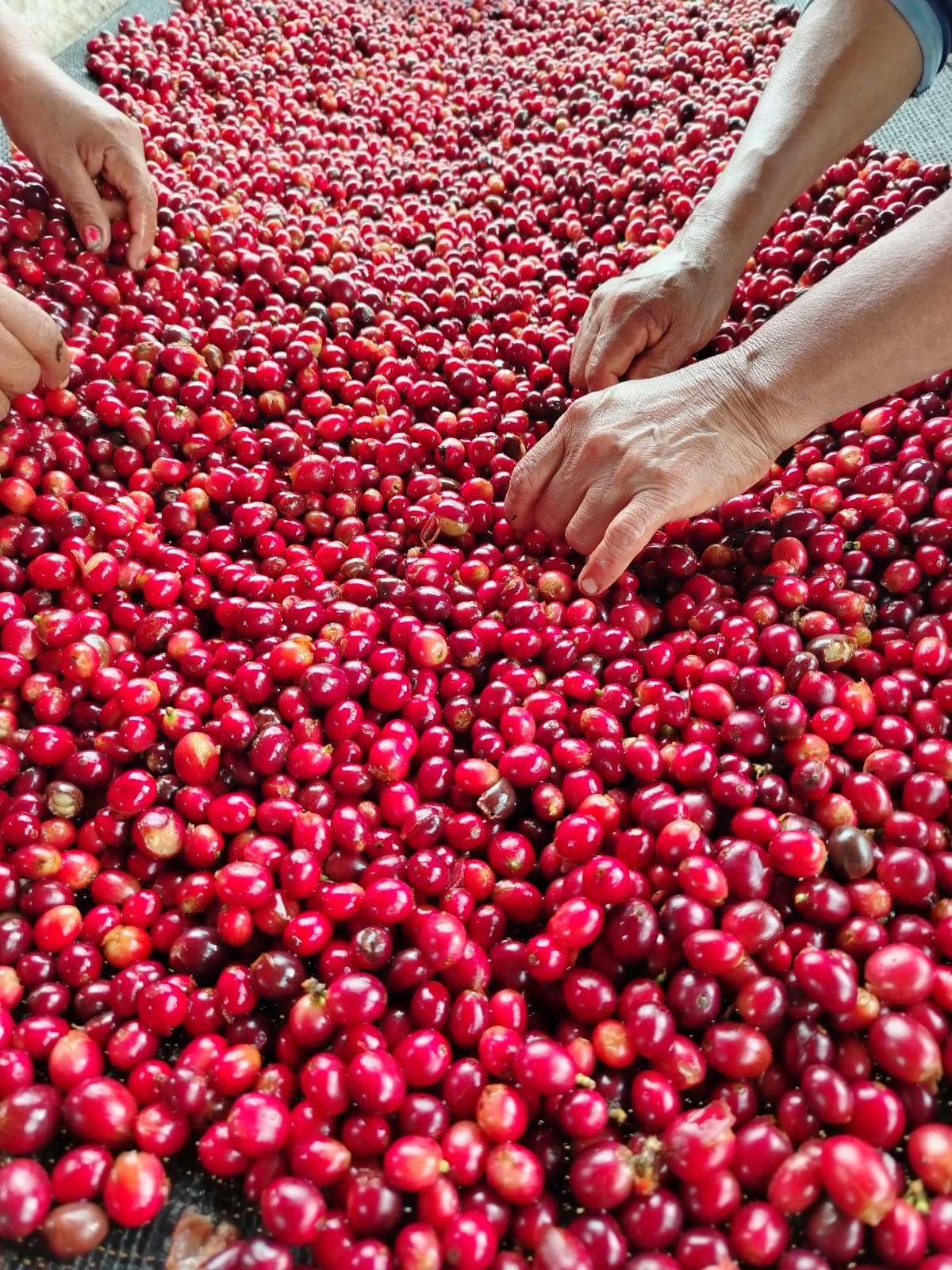
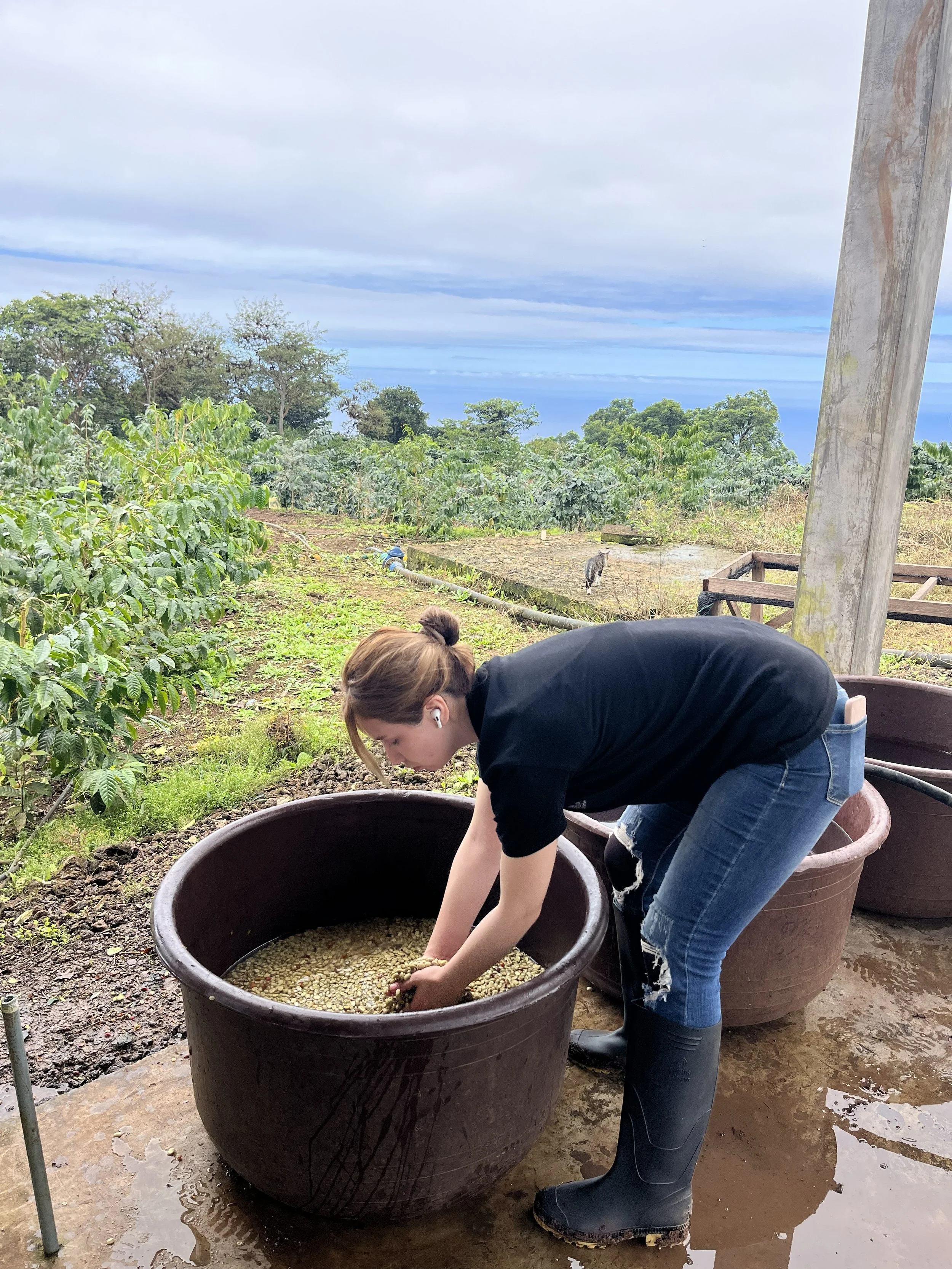
For coffees undergoing the washed or honey processes, the next step is depulping. During this stage, the cherries pass through a depulper where their skin and pulp are removed. This step significantly reduces moisture and allows for greater control during drying, helping prevent unwanted fermentation or rot.
Coffees processed using the natural method skip this stage.
Depulping
Before drying, the coffee is washed. The washing process removes plant mucilage that is found around the coffee seed inside of the coffee fruit. For coffees going through the washed process, this mucilage is removed entirely, whereas in honey processes only some, or sometimes none, of it is removed. Once the coffee is appropriately washed, it is ready to be dried.
Washing
Coffee Drying
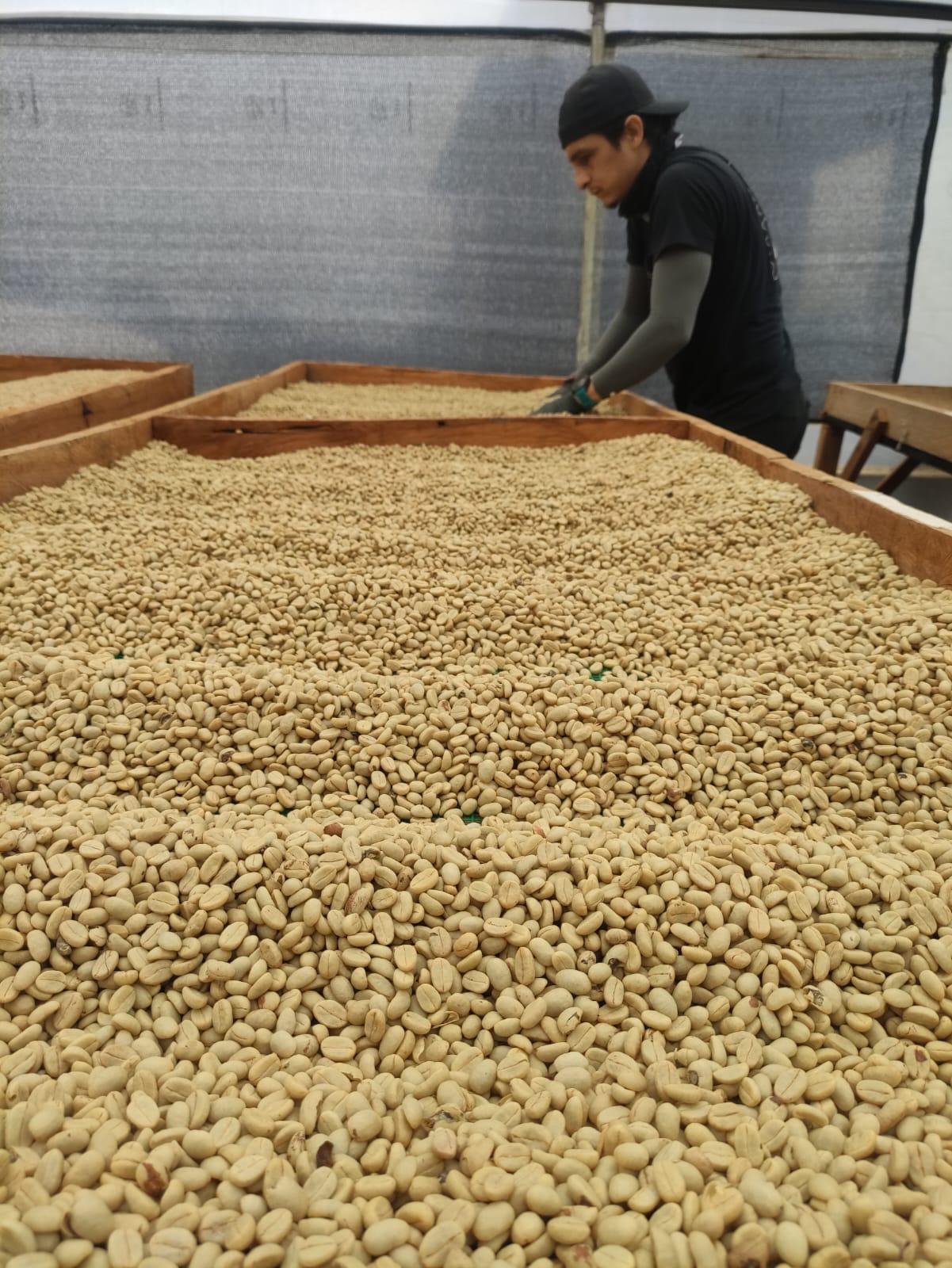
The final stage of post-harvest processing is the drying process. The drying process is essential to ensuring the quality of the finished product. If coffee is not dried quickly enough, it will develop mold or rot. If it is dried too aggresively, it tastes scorched and loses its natural flavor.
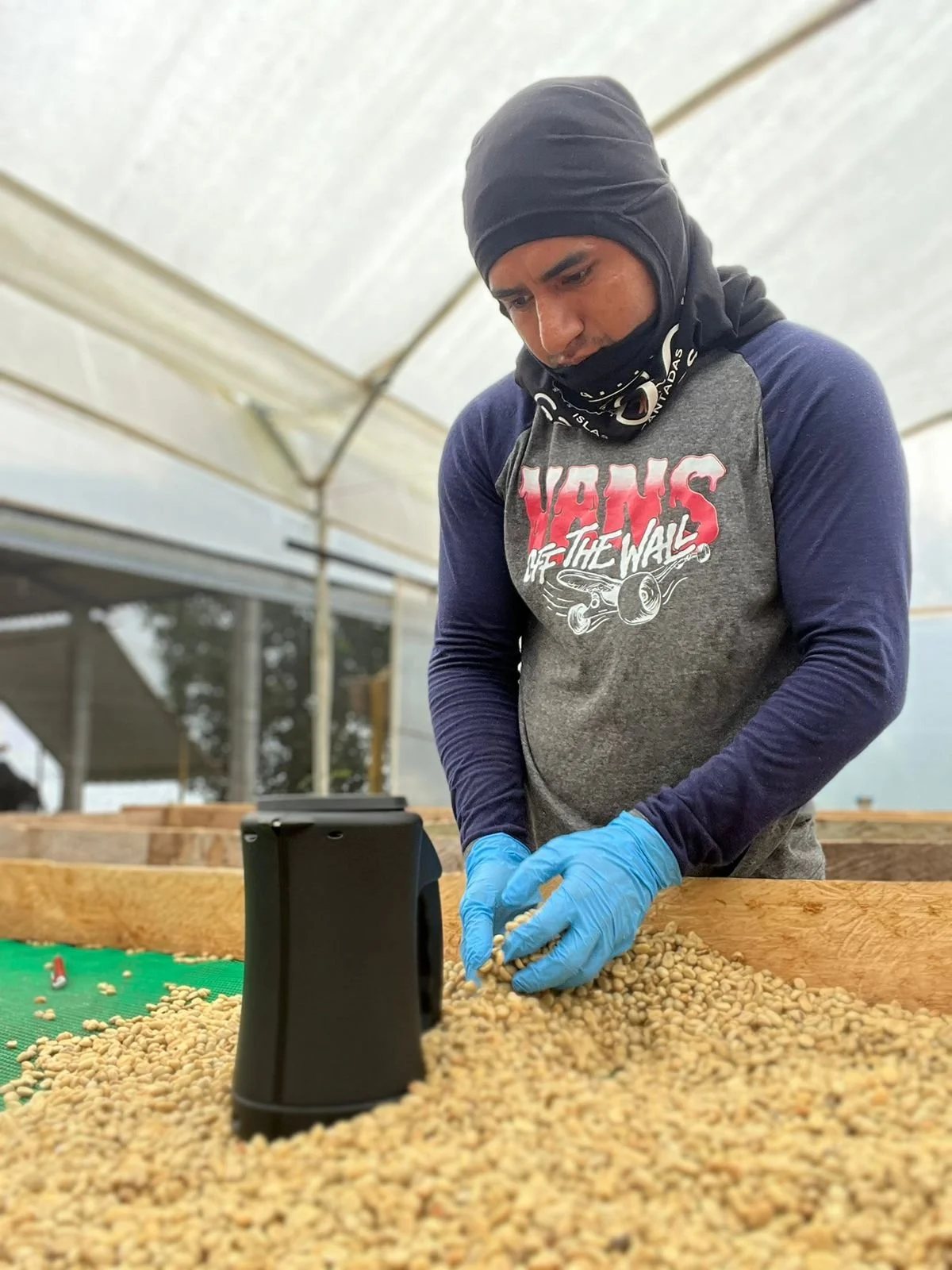
Because of this, we employ strict standards to ensure all coffee stays within certain parameters through the drying phase. Typically, this means that the coffee is brought down to 10-12% moisture within fifteen days of being harvested.
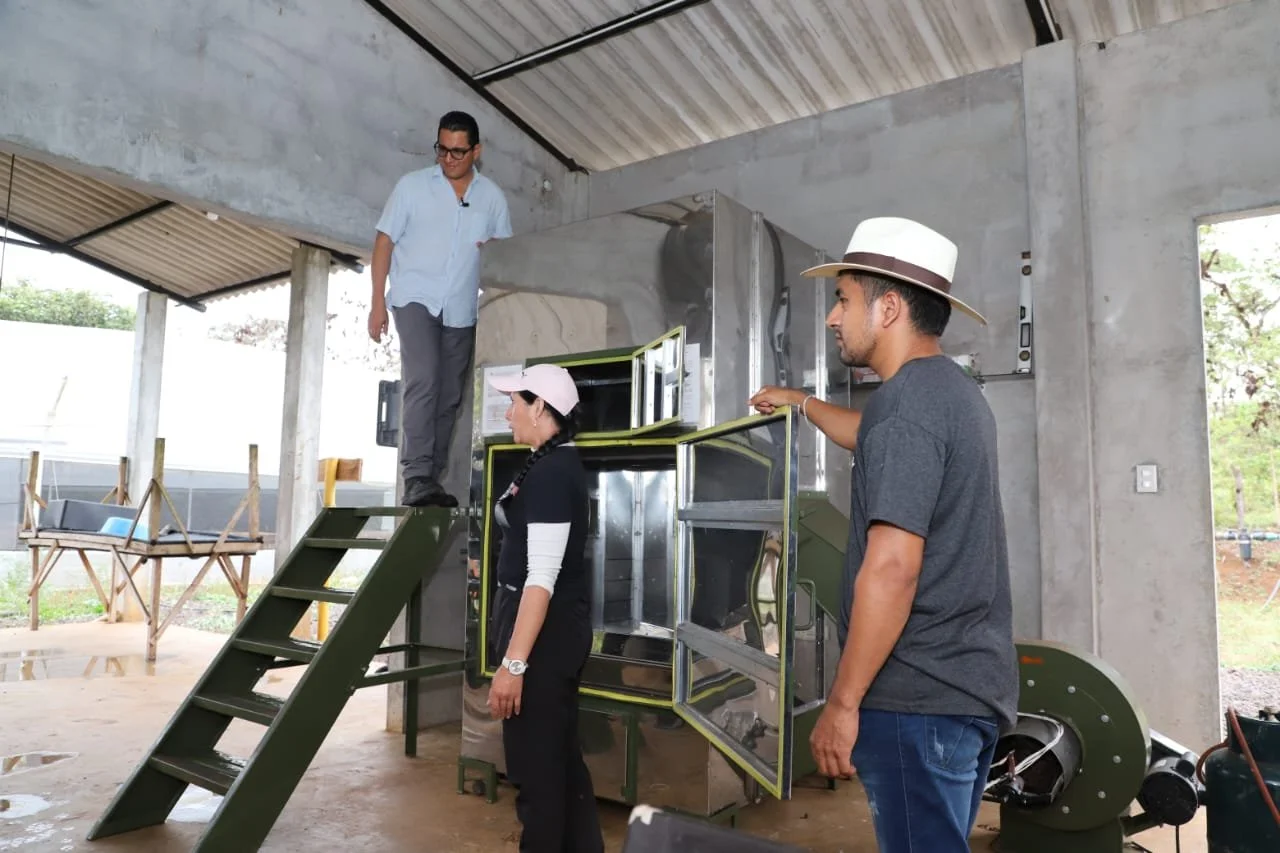
Most of our coffee is dried entirely on raised and ventilated beds in our greenhouse where ambient and bean humidity are measured daily. However, if the coffee is not drying quickly enough or has begun to stall, we move it to our mechanical dryer. There, the coffee is dried over low heat for several hours, or sometimes days. During this time, it is stirred regularly by a trained drying technician to ensure even drying and prevent over-drying.
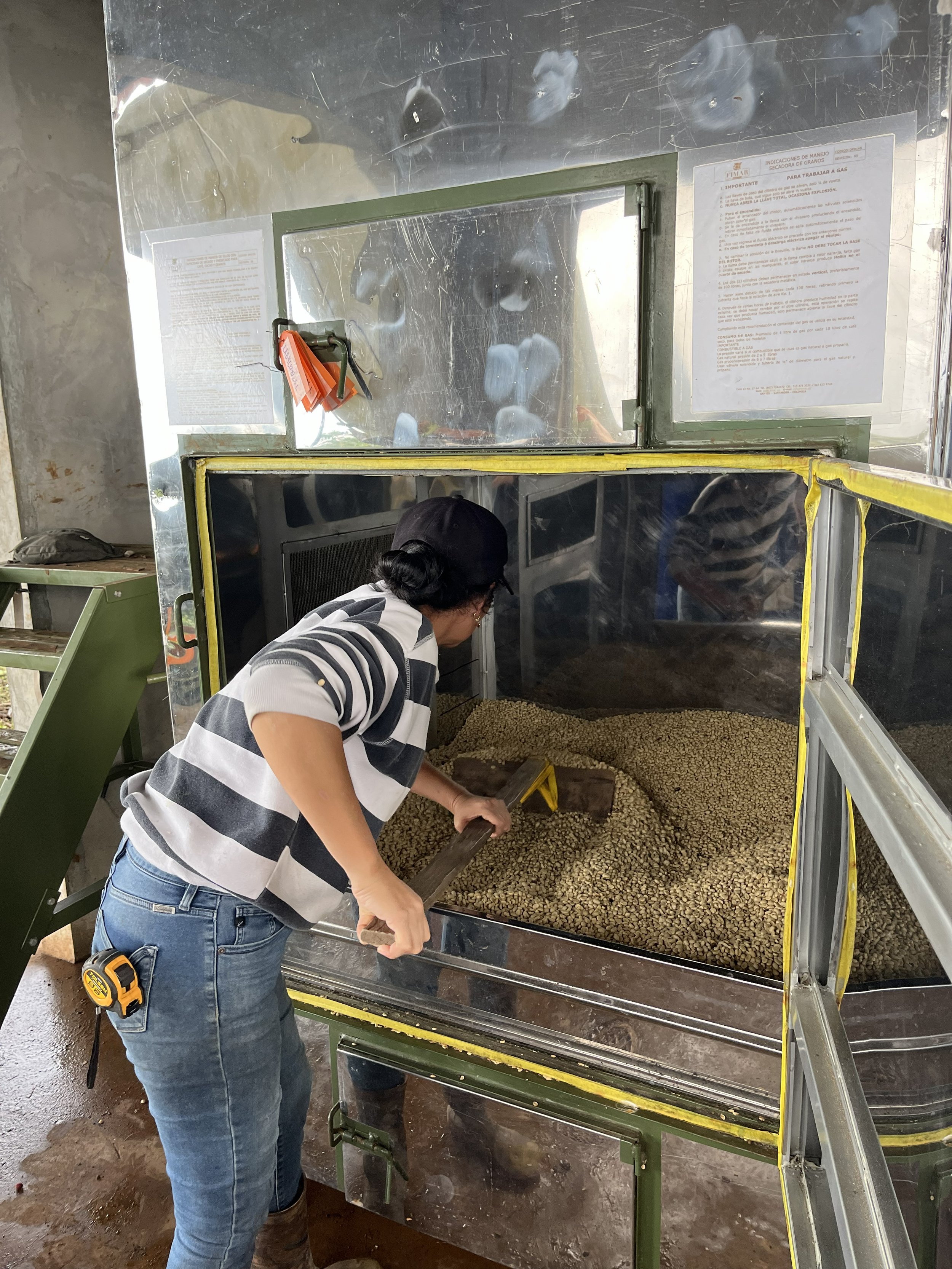
Through careful processing and controlled drying, we ensure that the quality developed in the field is preserved all the way through to the final cup.
You can learn more about our final stages of coffee production by clicking on the button below.
Interested in our coffee?
We welcome inquiries from all interested parties. We look forward to hearing from you